

Have a news story for Floorscape? Get in touch with us to submit editor@floorscape.org.uk
Have a news story for Floorscape? Get in touch with us to submit editor@floorscape.org.uk
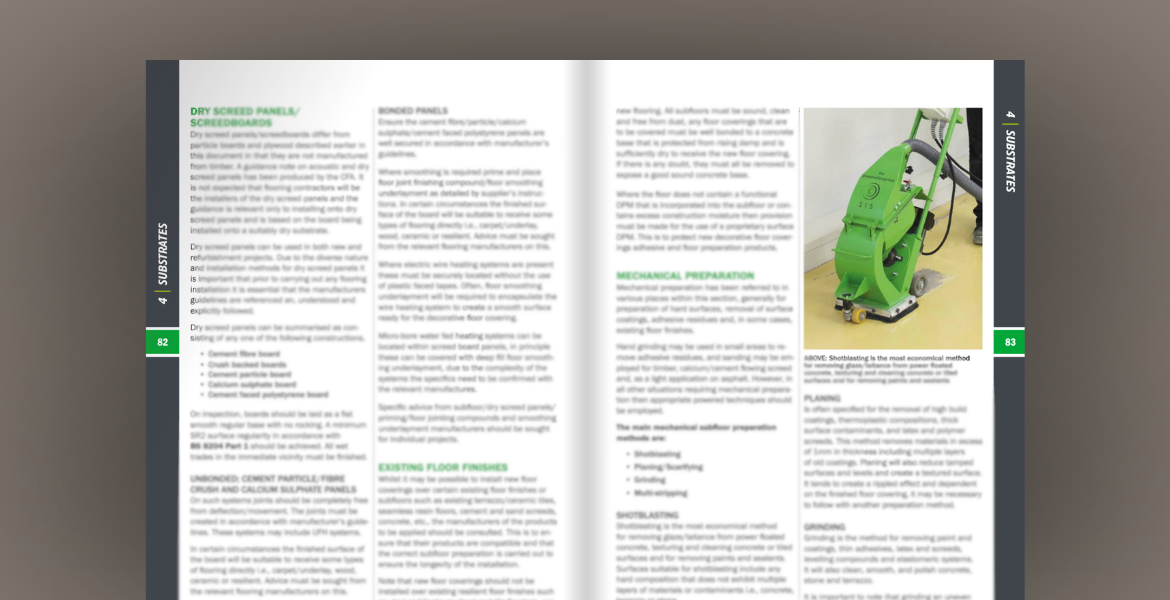
Mechanical preparation is a general term which can be used for the preparation of hard surfaces, removal of surface coatings, adhesive residues and, in some cases, existing floor finishes.
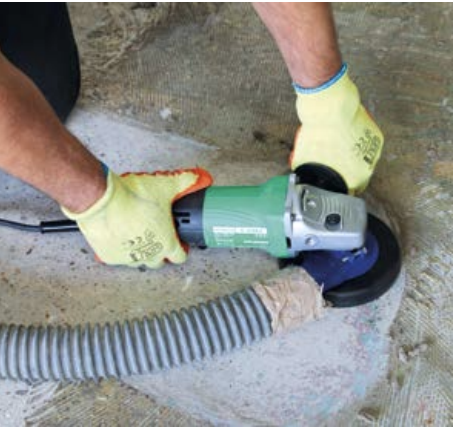
Hand grinding may be used in small areas to remove adhesive residues, and sanding may be employed for timber, calcium/cement flowing screed and as a light application on asphalt. However, in all other situations requiring mechanical preparation, then appropriate powered techniques should be employed.
The main mechanical subfloor preparation methods are:
Shotblasting is the most economical method for removing glaze/laitance from power-floated concrete, texturing and cleaning concrete or tiled surfaces, and removing paints and sealants. Surfaces suitable for shotblasting include any hard composition that does not exhibit multiple layers of materials or contaminants i.e., concrete, terrazzo or stone.
Shotblasting will not effectively remove soft composition screeds, sticky/bituminous materials or materials in excess of 500µm thickness.
Planing is often specified for the removal of high-build coatings, thermoplastic compositions, thick surface contaminants, and latex and polymer screeds. This method removes materials in excess of 1mm in thickness including multiple layers of old coatings.
Planing will also reduce tamped surfaces and levels and create a textured surface.
It tends to create a rippled effect and, dependent on the finished floor covering, it may be necessary to follow with another preparation method.
Grinding is the method for removing paint and coatings, thin adhesives, latex and screeds, levelling compounds, and elastomeric systems.
It will also clean, smooth and polish concrete, stone and terrazzo.
It is important to note that grinding an uneven surface will skim across the high spots (peaks) and not touch the lower ones (troughs) unless the surface has been reduced to the lowest composition first.
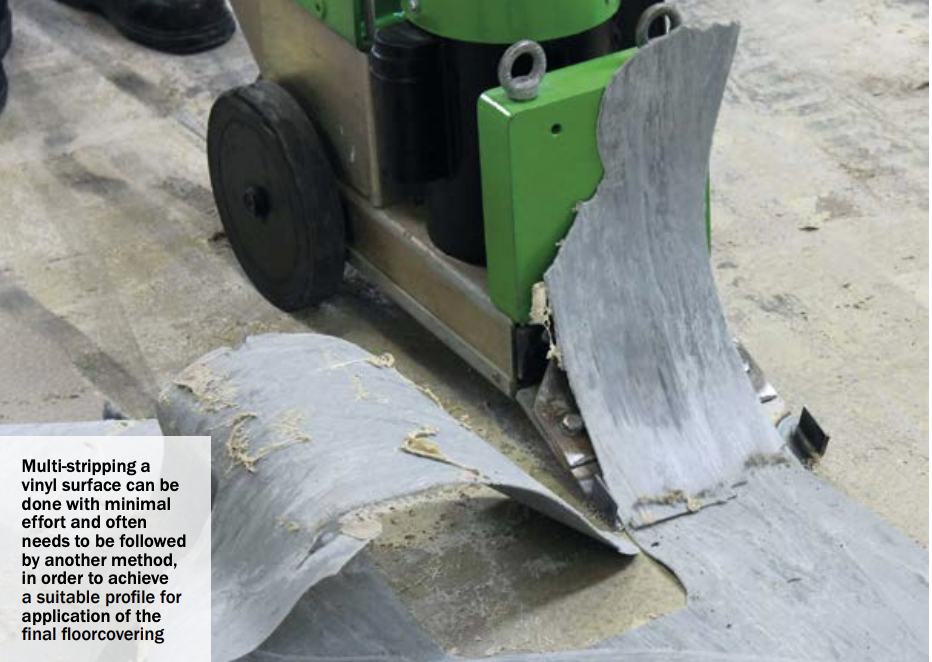
Multi-stripping is often selected when there is no other suitable method. A wide range of existing floor coverings can be removed with minimal effort including self-levellers, ceramic and stone tiles, vinyl, carpets and laminate flooring, latex, screeds and epoxy resin, thermoplastic lines, and adhesive and bituminous materials. Multi-stripping often needs to be followed by another method in order to achieve a suitable profile for the application of the final floor covering.
The size and scope of the project, the composition of the surface being treated, and material being applied should always be considered when selecting equipment and accessories. A particular concern is where flooring products incorporating asbestos fibres may be present. These can include old thermoplastic tiles and bituminous-based adhesives. It is important to get expert advice.
Most modern machines are designed to be used with dust extraction. In all cases, vacuum removal of dust and debris should be used both during and after preparation to ensure no contamination is left.
For more advice about substrates and subfloors, visit the CFA Guide to Contract Flooring.




Floorscape aims to serve as a valuable resource for both
the contract flooring
industry and
associated parties including architects, designers, main
contractors, shopfitters, builders
and
clients and is fully supported by the Contract Flooring Association.