

Have a news story for Floorscape? Get in touch with us to submit editor@floorscape.org.uk
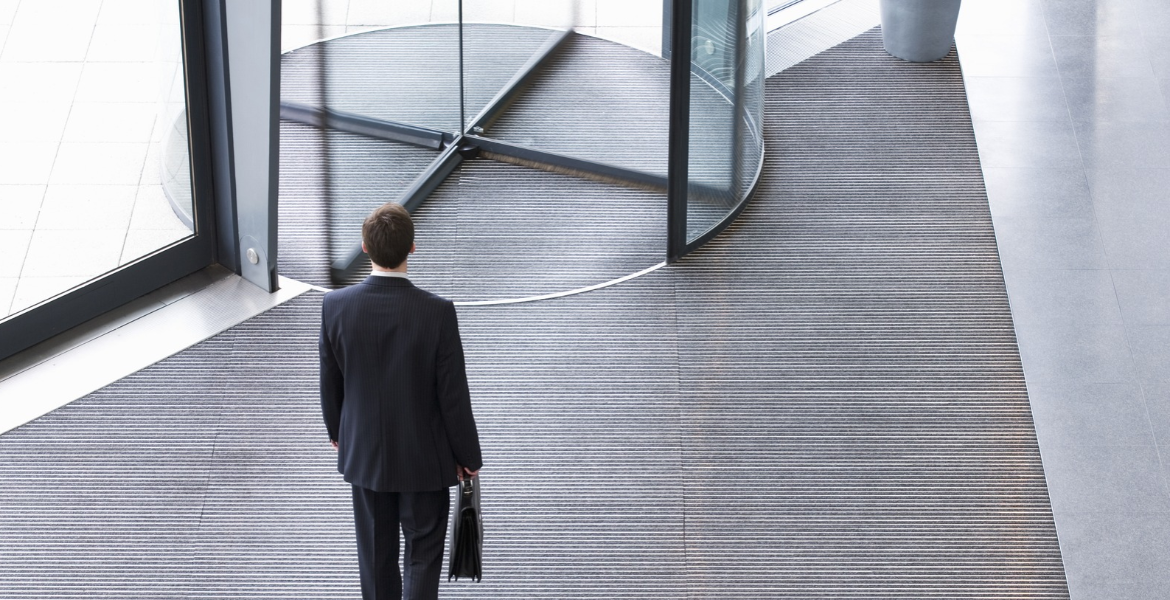
As much as 80% of dirt entering a building is brought in by foot and wheeled traffic. However, a well-designed and planned entrance flooring system can remove and retain up to 95% of all dirt and moisture entering a building by foot and wheeled traffic.
When fitting any internal floor covering, it is important to ensure the use of an appropriate entrance flooring system in order to optimise the long-term wear and minimise the potential for slip hazards on internal floor coverings. It also provides a significant reduction in maintenance costs and maximises the appearance retention of adjacent flooring products.
Entrance flooring systems are designed to protect internal floor coverings by reducing the ‘ingress of soiling and moisture into a building or to reduce the transfer of soil from one part of a building to another’ (BS 7953 Section 3.1). BS 7953 Entrance flooring systems – Selection, installation, and maintenance–further states that entrance flooring systems should perform the following functions:
Section 3.1 also states that ‘… the entrance flooring system should scrape, wipe and retain soil, making contact with both feet of people entering the building and, in the case of wheeled traffic, with the circumference of the wheels’.
In addition, BS 8300 Design of buildings and their approaches to meet the needs of disabled people states: ‘… the ingress of soil and surface moisture to buildings, or their transfer between adjacent internal areas, should be reduced to the lowest practical level, e.g., through the use of appropriate matting systems conforming to BS 7953’.
HSE (Health and Safety Executive) recommend the use of entrance flooring systems and the need for the entrance flooring system to allow several steps to adequately remove soiling. Whilst no test method to measure the effectiveness of entrance flooring systems is available, BS 7953 states that the length of entrance flooring system should achieve maximum number of footfalls within the available space.
The industry standard recommendation is to use at least 2m for light use areas and up to 7m for busy use entrances. The size and effectiveness will depend on the system selected but the general rule is the more matting used, the more effective the entrance flooring system is at preventing soil from entering the building.
Various systems are available for both internal and external use – a combination of both may provide the most effective performance depending on the entrance type and location. It is important to ensure that the entrance flooring system selected will remove and retain both the type and volume of soiling for each entrance location. Considering traffic type and volume as well as size of entrance flooring system, will help to optimise soil and moisture removal.
Various construction types are available, and BS 7953 provides a simple overview of these: Grille; Random looped; Ribbed: Modular and Textile. Within these types there are reversible and single sided rigid systems, click together modular systems as well as a variety of textile options including tiles.
Soiling can be defined in two simple categories: wet and dry. When selecting entrance flooring systems, consideration should be given to ensure adequate protection from both. This may necessitate the use of a combination of product types in the form of a Primary External, Primary Internal and Internal Secondary Zone system format. Primary Zone products are installed as the main line of defence from outside sources of soiling and are usually fitted within a recessed rigid matwell frame, incorporating a coarse or ribbed surface profile for effective removal of dry soil and debris and, depending on type and location, removal of moisture.
External and internal grade Primary Zone entrance flooring systems are available. When using products externally, the matwell will require an appropriate drainage system to avoid flooding when wet.
Secondary Zone products are available in recessed or surface mounted options to suit the environment and constructed using surface materials suitable for the removal of wet soiling and fine particulate soiling. In addition, Secondary Zone products are particularly suitable for use inside buildings between soil sensitive locations such as break-out, kitchen, washroom or vending machine areas.
The zone selection and format may vary according to the type and level of traffic. The use of a Primary External Zone will positively contribute to reducing larger particulate and level of soiling from entering a building.
Specialist fire retardant versions are available to suit specific site or location requirements. These are available in rigid and textile entrance flooring system formats.
It is essential that entrance flooring systems are regularly cleaned and maintained to ensure optimum performance so that they remain effective in service. The cleaning methods also need to be effective as significant levels of soiling and contaminants can be contained within the matting in a relatively small area compared to the overall building footprint. As with all cleaning processes, effective cleaning of entrance mats should be planned to take account of the nature and usage of the building and carried out when risks to building users are as low as possible.
Inadequate cleaning will result in the entrance flooring system transferring soiling from the mat itself onto adjacent areas. It is important to ensure that cleaning and maintenance instructions are provided for use by the end user.
For more technical guidance, visit the CFA Guide to Contract Flooring.



Floorscape aims to serve as a valuable resource for both
the contract flooring
industry and
associated parties including architects, designers, main
contractors, shopfitters, builders
and
clients and is fully supported by the Contract Flooring Association.

The views expressed in Floorscape do not necessarily reflect those of its publishers and include paid-for content. No part of this publication may be reproduced without the prior written permission of Smart Marketing Works.