

Have a news story for Floorscape? Get in touch with us to submit editor@floorscape.org.uk
Have a news story for Floorscape? Get in touch with us to submit editor@floorscape.org.uk
The government’s newly announced Warm Homes Plan promises to deliver £15 billion of public investment, roll out upgrades to up to 5 million homes that could save them hundreds on energy bills, and help to lift up to a million families out of fuel poverty by 2030, the Department for Energy Security and Net Zero declares.
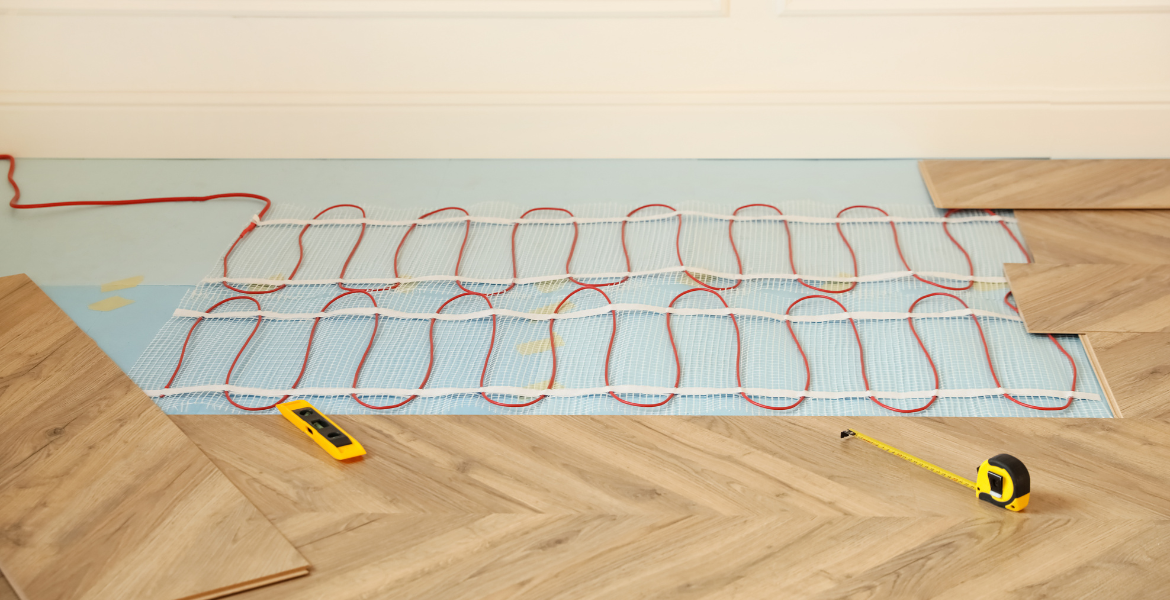
The plan includes a target of 450,000 heat pump installations by 2030. Coupled with funding, this strategy is likely to increase the growing use of underfloor heating systems as an established and popular heating option for commercial and domestic environments. For more detail, the CFA’s Guidance on Underfloor Heating considers the impact of large-scale heat pumps in place of traditional heat sources on floor coverings and installation, guiding how the contract flooring sector might be affected and need to respond.
The Construction Products Association (CPA) has welcomed the government’s Warm Homes Plan and its renewed focus on incentivising the uptake of renewable energy products such as heat pumps and solar, but does not welcome its move away from a ‘fabric first’ approach and proper insulation. CPA argues that the government has decided to generate more energy rather conserve it. With millions of households facing persistently high energy bills, and homes being responsible for around 20% of the UK’s carbon emissions the need for a large-scale, long-term retrofit programme has never been clearer. If delivered effectively, the Warm Homes Plan has the potential to support households, stimulate construction activity, and accelerate progress towards net zero. However, experience suggests that ambition alone is not enough, CPA warns.
The commitment to a £15 billion programme over the life of the Parliament signals a move away from fragmented funding pots towards a more strategic approach. But the success of the Warm Homes Plan will ultimately be judged not by its headline funding, CPA reasons, but by whether that funding is translated into sustained, high-quality delivery on the ground – something previous retrofit programmes have consistently struggled to achieve. From an industry perspective, long-term certainty is critical. Manufacturers, installers, and builders need confidence that demand will be stable over many years if they are to invest in new factories, product lines, training programmes, and apprenticeships.
CPA argues that there are significant practical challenges that must be addressed if the Warm Homes Plan is to deliver at the pace and scale required. First, skills shortages across construction remain acute. Delivering millions of home upgrades will require tens of thousands of additional trained workers, including retrofit coordinators, installers, assessors, and supervisors. Second, clarity on standards, performance outcomes, and compliance requirements will also be essential. High-quality retrofit is critical to ensuring that energy savings are realised in practice and that unintended consequences – such as damp, overheating, or poor ventilation – are avoided. Finally, many households remain cautious about retrofit due to concerns over disruption, workmanship, and value for money, often shaped by poor past experiences. A successful Warm Homes Plan must therefore combine funding with trusted delivery routes, clear communication, and strong consumer protections.
For more information, read the full Warm Homes Plan online.




Floorscape aims to serve as a valuable resource for both
the contract flooring
industry and
associated parties including architects, designers, main
contractors, shopfitters, builders
and
clients and is fully supported by the Contract Flooring Association.